- +27 (0) 10 446 5705
- gp@orsco.co.za
- Plot 13, RD 5, Brentwoood Park, Gauteng, 1501
ORSCO was appointed by Hans Bosch Civils (Pty) Ltd to carry out a comprehensive Ground Penetrating Radar (GPR) utility location survey at the Rand Refinery prior to planned excavation, drilling, coring, and construction activities.
The objective was to identify and mark probable underground utilities and subsurface anomalies, helping the client minimise the risk of service strikes while improving planning and site safety before intrusive works commenced.
THE CHALLENGE
Operating within an active industrial refinery presented several challenges. The site required a non-invasive investigation capable of identifying buried infrastructure while avoiding disruption to ongoing operations.
Additionally, the subsurface conditions contained conductive materials commonly associated with refinery environments, limiting electromagnetic signal penetration and increasing the complexity of interpreting deeper underground features.
OUR SOLUTION
ORSCO deployed its advanced Screening Eagle / Proceq Ground Penetrating Radar systems, utilising both:
THE SURVEY INCLUDED
Site mobilisation and survey planning
Line and grid GPR data acquisition
Interpretation of hyperbolic responses and continuous reflectors
Surface marking of probable underground services
Comprehensive reporting with recommendations for safe verification
KEY FINDINGS
The investigation successfully identified several subsurface features, including:
✔ Multiple shallow hyperbolic responses consistent with probable buried utilities.
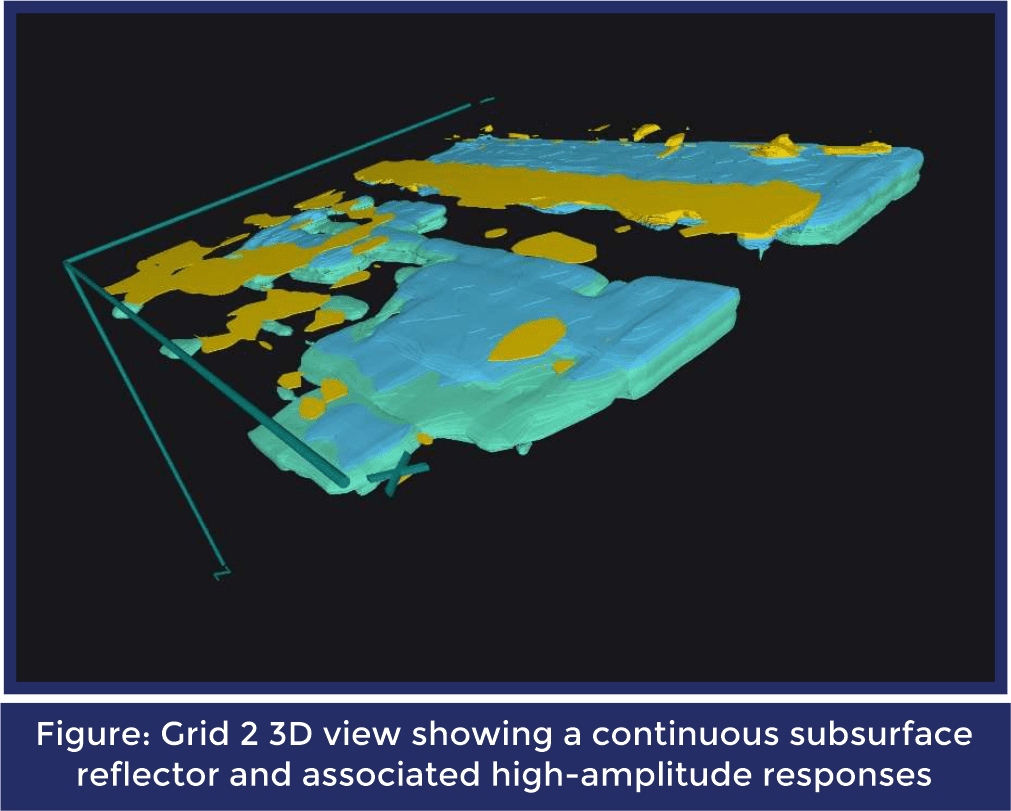
✔ A strong, continuous high-amplitude linear reflector detected within GP8100 Grid 2, interpreted as a probable underground service or significant subsurface feature requiring verification.
Despite challenging ground conditions, the survey provided valuable information to assist construction planning and reduce excavation risk.
PROJECT OUTCOME
The survey enabled the client to:
Reduce the likelihood of accidental utility strikes.
Improve excavation planning and site safety.
Identify areas requiring controlled verification before construction.
Make informed engineering decisions based on non-destructive investigation data.
Overall interpretation confidence was assessed as:
Shallow Utilities: Moderate to High Confidence
Deeper Targets: Moderate Confidence
The reduced confidence for deeper targets resulted from conductive near-surface materials that attenuated GPR signals – a common condition within industrial refinery environments.
ORSCO – Leaders in Utility Asset Management & Rehabilitation.
WhatsApp Us